Who am I? Click HERE to see my CV

Important!!! Use Firefox or Google Chrome to view this page. With Internet Explorer you may only visualize parts of this blog.

By Maria Zabala Peña at: englishforeso@yahoo.es or mariazabalapena@gmail.com. For ESL without photocopies go to my other blog HERE

New!! VIDEO BLOGS on English for Communications and on English for Office Applications (Computers). See links below.

English for Communications. Click HERE. By Beatriz Papaseit Fernández and myself, María Zabala Peña.
English for Office Applications (Computers). Click. HERE. By Beatriz Papaseit Fernández and myself, María Zabala Peña.
Showing posts with label Autonomous learning. Show all posts

What can we do for climate change. The role of individual and collective actions.

 Climate change is a recurrent topic in the examination to access university( Selectivitat) 

Level: Upper

Procedure: Listen AND read a lecture on climate change.


The lecture deals with the evil of thinking there is an irreconcilable opposition between individual and collective actions and how this misconception (individual Vs Collective) has been used by corporations to continue making money while polluting the environment. 


The task: 

Use the comment section of the blog  (remember to sign with your name) to:

  • Write 3 of 4 sentences that are key in the text. Explain why you think they are important. Indicate if you agree, you don’t agree or you think they need to be explained further. 

  • Share new words or expressions that you have learned and that you think might be useful for future essays. 


Click HERE to download the video and the script 


Why Quality Journalism is Important. Amal Clooney

Level: Intermediate to advanced 
Procedure:
  •  Listen to Amal Clooney's speech at the 2018 UNCA Global Citizen of the Year award (there is a link to unload it at the end,  if streaming does not work) 
  • Answer the questions.Some answers will require research or previous knowledge
Length of video:  19 minutes. 


Answer these questions using your own words
  • According to Ms. Clooney, why are journalists important ? Do you agree with her?
  • How much did you know about the situation of Rohingya in Myanmar? What have you learnt after watching the video?
  • What countries are mentioned as enemies of free journalism? Can you list Amal’s examples of unfair trial cases?
  • How many years have elapsed since the Universal Declaration of Human Rights? 
  • Why is Ms Clooney particularly proud of Nadia, the Yazidi woman?
    A French Multinational (Lafarge) has been found guilty of cooperation with Isis. Has this surprised you? Why?
  • What George Clooney’s movie is mentioned? Do you know what the McCarthy era is? If not, find out
  • Towards the of her speech Ms. Clooney talks about Jamal Khashoggi, what do you know about his case? Find out what happened , if you happen no to know
Afterthought
  • What are your sources of information on national or international news? Do you think they are quality sources? Why? 


 If you want to download either the video or the questions, click here


Ideas, history and culture with BBC Forum. Advanced listening

Discover wold history, culture and ideas with today's leading experts.
The Forum Podcasts

Level: advanced 
Procedure: download the podcasts and listen to news analysis anywhere
Length of podcasts: varied but most about 25 minutes.

For my students: these programs  may help you to prepare your presentation of a historical fact or a piece of news.


Click HERE to acces the Forum Podcasts

News Analysis: The Inquiry. Improve your listenig skills with BBC podcasts

The Inquiry is a BBC radio program that gets beyond the headlines to explore the trends, forces and ideas.
The Inquiry Podcast by BBC

Level: advanced 
Procedure: download the podcasts and listen to news analysis anywhere
Length of podcasts: varied but most about 25 minutes.
For my students: these programs  may help you to prepare your presentation of a historical fact or a piece of news.

Click HERE to access the podcast
 

Improving pronuciation with Lyricstraining

Level: any. Students choose the level of their task
Procedure: Students:

  • Click the link below
  • Choose a genre
  • Pick a song
  • Choose your  level
  • Fill in the gaps in the lyrics. 
Click HERE to enter Lyricstraining


Verb Tense Self Practice with EnglishPage

Level: medium or lower students with "grammar skills"
Material: link to task
Procedure: self study /independent learner
Notes:  if you have a mixed level class, some of your students may need to study or review verb tense formation. The link to english page.com, includes tasks, a verb chart and verb tense explanations.

Click HERE to enter the page.

Spell it!


Spell It with Merriam -Webster

10 quick questions to check your spelling abilities. 
Level: Intermediate and upper

Instructions
  • Listen to the word in context
  • Spell it 
  • See how your skills compare to the crowd
Click HERE to start the quiz 

Autonomous Learning. Merriam Webster:Name that thing. Visual vocabulary test on line for advanced students

Name that Thing by Merriam Webster

Aim: identify the word you see in the picture/improve your reading speed and vocabulary
Level: advanced.Words range between middle advanced to advanced levels. See pictures to decide if this quizzes are within your reach!
Procedure:
  • You have 15 seconds to answer each question.
  • The faster you answer, the higher your score.
  • The harder the question, the higher your score.
  • At the end you can compare your score with other participants'  within your age range.

Access the quiz by clicking Here: Name that Thing


Pronunciation. How do you say...?

MORE WORDS ADDED TO THE LIST.
 IF YOU ARE A SPANISH NATIVE SPEAKER take a peek at the  list of words . New words have been added ! 

"How you say" is an on-line tool that will help you to learn how to pronounce words.
Aim: students introduce words they do not know how to pronounce in order to learn them with the sound Suggested procedure if you want to use this tool in your class
  •  make a list of the words students mispronounce.
  • group students in teams
  • write the words on the board
  • ask teams (in turns)  how a word is pronounced
  • check the pronunciation by introducing the  in How j say
  • give a point to the team that pronounces the word correctly
Access the HOWJSAY page by clicking HERE 

IF your students are Spanish speakers, you may start with some (or all) of these words:
  • Problems with "I" or "AI" sound:  to determine, idea, opposite, to  examine, horizon, since, microphone,  to print, tiger, virus, compliance  /kəmˈplaɪəns/  
  • Problems with stress pattern:  successful,  component (stress in "po"), foreigner, surface, insurance, hotel, interesting, incorregible (stree in KO), )
  • Words with two stress patterns: to present/ a present, 
  • The "able" words: vegetable, suitable (the "i" does not sound), able, comfortable, table, capable, removable, printable 
  • Letter B  does not sound: debt, plumber, doubt
  • Letter W does not sound:  sword,  answer, drawer. would, write, whiskey. awful, awesome 
  • Other silent letters: mayor (no "y"), heir (no h), guard (no u), shepherd (no second h), sign (no g) , know (no k), listen (no t)
  • The -es ending sounding as "iz"or "is". Most student ignore the ending: services, oranges, he fixes/watches, exercises, sizes
  •  The ones they always get wrong:  biscuit (the "u" does not sound), receipt, recipe, architecture (the K), busy, , key, Pharaoh, choir, aisle,rare, archive (K), corps  /kɔː/ as in Peace Corps vs. corpse.
  • The ones that are very similar to Spanish words and students pronounce in the Spanish: fashion: Jamaica, Arkansas, Zanzibar, Ottawa.Lancaster, Asia, South, Trafalgar  Square (stress on FAL)
  • The ones with less syllables than we expect: chocolate, digital, restaurant,  basically
  • Teasers (homophones or almost homophones): flour and flower,  guerrilla and gorilla, waist and  waste, pear and pair, heir and hair, write and right, four and for, hear and  here, no and know...  For more homophones in British English go to this page HERE
  • -age words: beverages (also stress pattern), village, image, message, usage

Autonomous Learning: Video and tasks for teens and adults by the British Council

Aim: this British Council site contains videos with pre-watching and post watching tasks for teenagers but most of the topics should appeal to adults too.

Click HERE to access the British Council videos for teens page. 

Level: the level of the tasks are indicated under each video. Most I have seen are B1 or B2 but check for other levels.
This site belongs to the British Council
Topics: there is a very wide range of topics, from food, tourism and street art to homes of the future and European integration.
Procedure: Videos come with:
  • on line self corrective pre-watching and post watching tasks.
  • a printable version of the same  tasks that the teacher may bring to class. The t
These tasks could be carried out:
  • by the students on their own.
  • in class by projecting the on-line tasks on the White Board.
  • in class, with the help of the teacher by distributing a photocopiable version of the tasks.
Click HERE to access the British Council videos for teens page 

Autonomous learning quizzes: medium to difficult vocabulary

Aim: students take vocabulary quizzes on different topics such as cinema, banking, idioms, homonyms, easily confused words, historical events... you name it!
Level: medium to difficult

The quizzes have been gathered by 4esl.org
Click HERE to access the quizzes. Scroll down to  view  the difficult ones!


One minute listening videos. Spice up your classes with the BBC Express English series

BBC offers the possibility of listening to a series of short texts on a wide range of topics.

The texts are about one minute long, that's the reason for the series name,  and the script is included. 

I think this can be a good starting point (prompt, warm-up)  for some of your classes as many of the topics are part of the curriculum. Some examples are:  trips, colours, relationships, food choices, shopping, phobias, honesty, new year resolutions... you name it.

The videos can be downloaded from the Express English site or be watched on line.
To access the Express English site click HERE

I have embedded some of the videos below with the link to the page where the script is, but please, browse around. There are  more than 30 choices for you at the Express series site. 

See these examples:Jealousy, Freedom and Fashion. 

 JEALOUSY: Download the scrip from the site HERE


When do you feel free? Download the script HERE


What's in fashion at the moment. Download the script   HERE 


Ello listening site. Listen, take the quiz and read the script (if needed)

Elllo stands for English Lesson Listening Library. It  is a short video site or slide share site  where students can listen to  and view short videos/presentations. There is a script for the texts you hear and the recordings are pretty clear. When you finish listening you can just do the listening quiz.

LEVEL:  Lower intermediate or upper 

Warning:  It might be difficult to find the audios  you like as the web is a bit chaotic and you seem to need either the number of the video or the name of the  series to which it belongs. 

This is the link to the site: HERE

See the links to the videos I have chosen  for you below but feel free to browse around

These are some of the examples you may like:


a. Trip to Cambodia:  Julia tells us about a memorable trip in Cambodia to raise money for a charity. .It includes the audio and a slide presentation of her trip as well as the script, vocabulary and quiz. There are 4 presentation on the same subject.


Click HERE


Thanks to my colleagues at the Training British Council Course 2013 for recommending this site.


Linguee on-line dictionary. Find words in context.

Linguee is an on-line dictionary that contains a search engine that enables users to look for bilingual texts.
The available languages are English to/from: Spanish, German, French and Portuguese.

Click HERE to access Linguee
  •  How does it work?
Capaz de = Able to = Capable of
Let's  say that, as a Spanish speaker, you want to know  the  preposition that   follows the expression "ser capaz" , which in Spanish is followed by the preposition "de".

You enter the text "capaz de" in the engine  and Linguee offers many parallel texts with that expression. As you can see in the displayed image, the English preposition is "to"  after "able"( not "of")  and "of" after "capable". 
  • Advantages
The parallel texts have been checked by Linguee editors. If the translation of the word has not been verified the parallel texts is preceded by a warining sign (a triangle). 

Linguee is NOT an automatic translator. Use your head and in the long run you will see this as an advantage.

Click HERE to access Linguee 

Who wants to be a millionaire? Autonomous learning

Most of you know the game Who wants to be a millionaire? Are you ready to play?
Aim: practice your reading skills

Level: students  may get  general knowledge questions as well as language questions. Therefore this game aims at students with higher levels of English.

Optional task (two options):  students  create  their  own set of  questions for the contest. You can download the instructions for your students by clicking the link below.

  • Option 1: download and photocopy the instructions provided below. You will need one copy for every two students. 
  • Option 2: if a projector is available, you can explain the task to your students by using the provided  Power Point. Think it twice before printing and photocopying!.

THE GAME (on line):

Click: HERE to access the game online.

MATERIALS. 
TAKE YOUR PICK!!!

Click  HERE to access:
  • A worksheet with instructions for the students
  • A Power Point presentation with the instructions 
TAKE YOUR PICK!!! Remember you need either the Worksheet OR the PP Presentation


Autonomous Verb Tense Practice

This is a link to a post  written by  Ingrid Chavarria
Click HERE to go to Ingrid's Post
Ingrid has grouped links to a variety of verbal tenses so that you can study autonomously.
The links include, among other items.
  • Present simple
  • Present continuous
  • Past simple
  • Past continuous      
  • Present perfect
  • Past perfect
  • Future (will/ to be going to)
  • Modal verbs
  • Conditional
  • Passive voice
  • Reported speech
  • and more!
Click HERE to go to Ingrid's Post

Many thanks to Ingrid Chavarria for having put together all of these links for us :-) 

Autonomous Learning. Randall ESL Lab. Listen, answer questions and read the script.

The Autonomous learning label contains tasks that students can carry out on their own

Randal Listening Lab:

Aim: practice your listening skills by listening to a wide range of conversations. Everyday topics such as going to the hairdresser's or making an emergency call.


Access Randall Listening Lab HERE


Autonomous learning. Lingro webpage dictionary

The Autonomous learning label contains tasks that students can carry out on their own.

Aim: read any webpage with the option of having unknown words translated.

 Procedure: 

Copy the URL you want into box 1, choose your dictionary and click unknown words
  • Copy the link of the webpage you want to read
  • Open the lingro page See link underneath
  • Paste the link of the page you want to read into BOX 1. See picture
  • Choose the dictionary.  In our case we have chosen  English to Spanish.Feel free to browse other options
  • Read  your webpage and click the unknown words to obtain a translation into the chosen language
Access the lingro website HERE
Thanks to our teacher trainer Mike O'Neill for providing us with the link to this resource. Course 77 at the British Council Summer 2012.


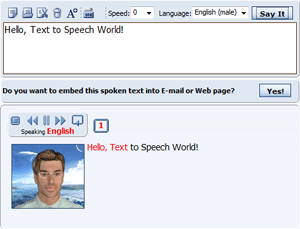
Autonomous learning. What does your presentation sound like?

The Autonomous learning label contains tasks that students can carry out on their own.

 Use a text to speech page to ensure the correct pronunciation of your speech.

Imtranslator: write your text and listen to it!
  • Use any of the websites below
  • Copy and paste excerpts of your speech into the window you'll on the right
  • Choose speed, language (English) and avatar
  • Listen and take notes 
Link to imtranslator  (see picture) page:  HERE  
Link to acapellla page: HERE  

Link to natural readers page:  HERE


Thanks to our teacher trainer Mike O'Neill for providing us with the link to  the natural readers page. Course 77 at the British Council Summer 2012

Autonomous learning. Freerice quizzes on English vocabulary, English grammar, humanities, maths...etc

The Autonomous learning label contains tasks that students can carry out on their own.
Access the web HERE, choose your topic and start donating. 

Aim: practice English vocabulary (from level 1 to level 60), your grammar (from level 1 to level 5)  and also other topic such as Maths, Literature or Geography...

Participate!  you are donating 10 grams of rice every time you hit the correct answer.

Access the web HERE, choose your topic and start donating.

Freerice is a non-profit website that is owned by and supports the United Nations World Food Programme.